
READING FOR NOVEMBER 6, 2024: DEUTERONOMY 3, JAMES 2, PSALM 117 DEUTERONOMY 3 ISRAEL’S VICTORIES EAST OF THE JORDAN RIVER
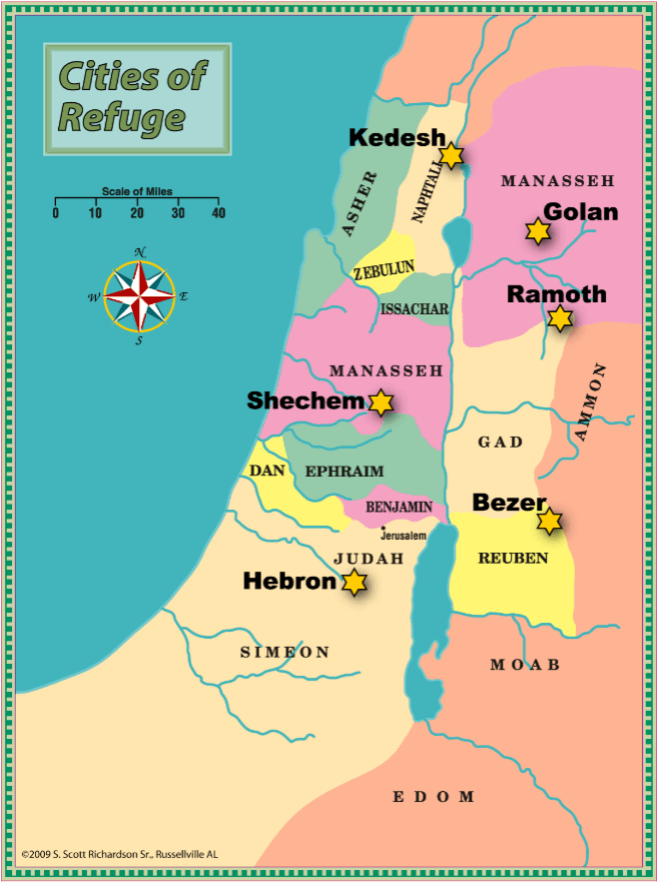
| As the Israelites approached Canaan from the east, you may recall, they asked permission from the Amorite king Sihon if they could pass through his land. He refused, which resulted in the Israelites defeating him at Jahaz (Deut. 2:24-37). Jahaz is centrally located in the territory that was eventually allotted to the tribe of Reuben. After this they turned northward toward Bashan and defeated King Og at Edrei (Deut. 3:1-11). Edrei is in the east-central region of the territory later known as East Manasseh. Though the lands of Sihon and Og were not part of Canaan (which lay west of the Jordan River; see Numbers 34), the tribes of Reuben, Gad, and Manasseh requested that this land be allotted to them as their inheritance, and Moses agreed. These eastern tribes promised to continue helping the other tribes drive out the Canaanites from land west of the Jordan River (Deut. 3:12-20). Moses told Joshua, his upcoming successor, that these two victories are what he could expect once they entered Canaan. In fact, Moses is so excited that he asks God if he might be allowed to cross into Canaan himself. God was not happy that Moses even brought this up. Note that we can forfeit our chance to participate in some of God’s victories by not being immediately obedient to God. Let’s not make this same mistake. What’s God asking us to do today? |
READING FOR NOVEMBER 6, 2024 CONTINUED: JAMES 2, PSALM 117 JAMES 2 This chapter is the clearest in the Bible regarding the sin of discrimination, in this case based upon social class. Christians need to treat all people with equal respect and likely need to be more intentionally loving towards those society tends to dishonor. The church has not always had a good track record on this point, much to our shame. James reminds us that it has usually been God’s practice to work through those the world finds insignificant. Jesus, himself, is called the cornerstone whom the builders rejected (Matt. 21:42). Let’s be particularly welcoming to those rejected by society.
James goes on to clarify that when we show favoritism, or rather disfavoritism, we are really violating the second great command to love our neighbor as ourselves. We also become guilty of other related commands, such as adultery and murder. They hang together. As redeemed Christians indwelt by the Spirit, we understand that freely obeying God’s commands offers us a life of maximum freedom from the bondage of sin as well offering the promise of eternal reward bestowed at the judgment day.
The remainder of this chapter has been the source of some discomfort for centuries. How do we reconcile the idea from verse 26 that faith without works won’t save us with Paul’s insistence in Ephesians 2:8-9 that “it is by grace you have been saved, through faith—and this is not from yourselves, it is the gift of God— not by works, so that no one can boast”? The traditional view is saving faith always results in good works. It’s faith that brings works, just as first contracting a virus will later result in a fever. It doesn’t work the other way around. We can never earn or merit salvation apart from faith no matter how many good works we do. PSALM 117 Here is a Psalm most of us could easily memorize in minutes. It’s not a bad idea. There are just a few thoughts. All of them are powerful. The command to praise the Lord begins and ends this Psalm. Reasons for this praise are found in between. First, the Psalmist reminds all nations to sing praises. He knew what the research has now shown: “Singing lowers cortisol and relieves stress and tension; singing releases endorphins that boast energy; singing focuses the mind to be completely in the moment; singing even synchronizes heartbeats to improve social bonding; singing motivates people to serve others; singing increases levels of the protein Immunoglobulin A thereby strengthening the immune system; singing improves breathing and lessens the chances of a panic attack; singing is both an aerobic and upper muscular exercise. singing improves the parasympathetic nervous system to help heart rate, breathing, and digestion; and singing helps alleviate pain.” Then God’s mercy is singled out for praise. Psalm 103:10 reminds us, “He [God] does not treat us as our sins deserve or repay us according to our iniquities.” Finally, he reassures us that what was true about God then, is true about God now, and will be true about God forever. Those who teach that God’s truth has changed ignore this central teaching of the Bible, known as God’s immutability.
