NOVEMBER 12, 2024: DETERONOMY 7, 1 PETER 1, PSALM 119:1-8 DETERONOMY 7 God warns that Israel must completely destroy the seven nations that occupied the promised land. They should not negotiate with them, show them any favor, or intermarry with them but rather completely destroy them. This strikes many of us today as harsh. We know that God is loving, merciful, and just. How can we reconcile all this? First of all, we see in Deut. 7: 6-8 that God, who alone understands all things, chose Israel to be a special possession of His out of all the people of the earth. Through this choice, God brought the entire world the prophets, the scriptures, and finally the Saviour of the world, Jesus Christ. So as Israel is blessed, eventually all peoples of the world will have the opportunity to develop a saving relationship with God through faith in Jesus. God’s working through Israel also highlighted His power and grace, because, as it states in verse 7, they were chosen because they were smallest nation. Verse 1 says these seven occupying nations are all greater than Israel. Thus, Israel’s victory over them will highlight God’s grace and faithfulness to His covenant, not Israel’s power.
We see hints of the evil of these nations that justified this destruction. In verses 4-5 we learn that they worshipped idols. In verse 10 we see that God repays those who hate Him. Thus, we can infer these nations hated the one true God. Back in Leviticus 20:23 God explained, “You must not live according to the customs of the nations I am going to drive out before you because they did all these things, I abhorred them.” What were some of these practices? They included child sacrifice, consulting mediums, adultery, incest, and having sex with animals. Not recorded are ways that God may have tried to restrain these behaviors, but we do know from Romans 1:18-20 and 2:14-15 there are universal standards of God of which all people are aware. Thus, we can trust that God’s judgment on these nations was right: “Will not the Judge of all the earth do right?” (Gen. 18:25).
In light of the above discussion and as part of this total separation, God warns the people not to intermarry with these nations. It is not because that racial intermarriage was wrong then or is wrong today. It was so that these brides not “turn your sons away to serving other gods.” This prohibition against marrying outside the faith is still in place: “Do not be yoked together with unbelievers. For what do righteousness and wickedness have in common? Or what fellowship can light have with darkness? What harmony is there between Christ and Belial? Or what does a believer have in common with an unbeliever? (2 Cor. 6:14-15).
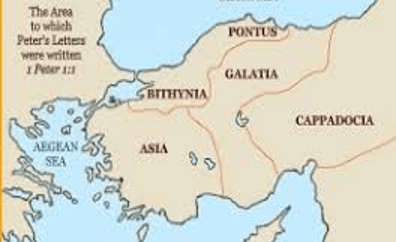
1 PETER 1 The Apostle Peter wrote this letter to what he calls exiles, who were Christiansscattered throughout five regions of present-day Turkey. It seems they were not exiles in the same sense as Jews, who were driven out of Israel. Verse 18 implies that they were Gentiles
READING FOR NOVEMBER 12, 2024 CONTINUED: 1 PETER 1, PSALM 119:1-8
| because they “were redeemed from the empty way of life handed down to you from your ancestors.” Thus, they were not part of God’s original covenant people. They were exiles in the sense they were “foreigners” because their true home was in heaven (vs. 18). This is our status, too, as citizens in heaven while we are resident aliens here in Yorktown, Indiana. |
Verse two states what their (and our) purpose is while on earth: to obey Jesus Christ. It would be instructive to read all the commands of Jesus in order to better understand our purpose. One that stands out, because it was His final command: “Go, therefore, and make disciples of all the nations, baptizing them in the name of the Father and the Son and the Holy Spirit” (Matt 28:19).
Peter offers a blessing to God on behalf of all of us who have been born again. Can we all articulate the time in our lives when we went from death to life? One danger in the experience of Methodists is to believe rebirth occurred when we were baptized as infants. Unless some of us were child geniuses in the extreme, we did not have the cognitive abilities to realize we were lost in sin, needed to repent, believe Jesus died and rose, and trust Him as Lord. If we have been born again, rejoice in this salvation, and understand its eternal value, Peter says we have the spiritual resources to withstand the trials in this life. Peter said the great prophets foresaw these blessings in Jesus, even though they did not experience the same blessings we enjoy. Even angels are interested in this great gospel. So, we need to act in obedience and holiness. We need to realize our time on earth to obey is fleeting. We need to fervently love each other. And we need to live in light of the eternal truths of the Bible.
PSALM 119:1-8 This longest chapter in God’s word is fittingly all about God’s word. We learn that we will be blessed if we actually live according to His word. It increasingly seems that folks work hard at explaining why it no longer applies instead of conforming to it and experiencing its blessing. Of course, it will be at odds with our sinful culture. That’s why we need to read it.
There is much talk today about wanting justice. Such a concept demands that there is an objective standard of right and wrong against which to measure our actions. The Bible claims to be that unchanging standard. Otherwise, justice is up for grabs to whomever is the most powerful. The Psalmist states the Bible is God’s precepts, God’s statutes, God’s commands, and God judgments. He absolutely affirms that God inspired human writers to convey God’s will to us. This is also what Jesus affirmed: “Do not presume that I came to abolish the Law or the Prophets; I did not come to abolish, but to fulfill. For truly I say to you, until heaven and earth pass away, not the smallest letter or stroke of a letter shall pass from the Law, until all is accomplished” (Matt. 5:17-18).