READING FOR MARCH 31, 2025: 1 SAMUEL 23, ROMANS 13, PSALM 25:11-22 1 SAMUEL 23
This is dazzling display of God’s sovereignty, power, and omni- science. David is informed that the Philistines are plundering Keilah. He inquires of the Lord who gives him approval to defend Keilah. His men, understandably, are not supportive, given their concern for Saul’s threat as well. So, David goes to God for con- firmation. This time God promises a victory for David, which, of course happens. Now Saul learns David is in Keilah. David asked God If the people of Keilah will turn him over to Saul if he stays there. God said they would. This is an example of what some call “middle knowledge” or Molinism. God knows what everyone would do if placed in any situation even if it doesn’t happen. Thus, some believe, including this writer, that God knows who would respond to the Gospel if they hear the Gospel. It could be possible, then, that everyone who God knows would respond to the Gospel is placed by God in a position to hear and respond. This approach balances God’s choice or sovereignty with man’s freewill to respond or not respond.
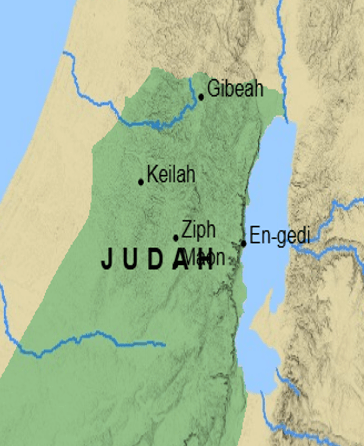
Don’t worry if that last part about Molinism is a bit confusing. Molina first articulated this concept in the sixteenth century in Spain. Knowing God is trustworthy and loving is the main thing. Isn’t it interesting that after David saved Keilah from the Philistines, God knew they would turn David over to Saul? What happened to gratitude? So, David fled Keilah to the wilderness around Ziph where he met with Jonathan for the last time. Jonathan encouraged David not to worry about Saul, stating that David, not Jonathan himself, would be the next king. Jonathan thought he would be David’s second in charge, but he died before David became king. Once more they renewed their covenantal friendship before a last parting.
Then people from Ziph traveled to Saul at Gibeah, letting him know they would hand David over to him. In return, Saul gave them the Lord’s blessing. Famous so-called Christian leaders might say that the Lord will bless us for doing this or that—maybe giving them money or backing candidate A or B. That doesn’t make it so. Trust God’s word on these matters, not someone whose track record is as disobedient to God as Saul’s is. Saul and company pursued David to Moan (look behind the capital “H” in Judah). Saul was on one side of a mountain and David the other. Before Saul could catch David, he was called away to defend against an attack by the Philistines. Meanwhile, David escaped to En-gendi. “We know that God causes all things to work together for good to those who love God, to those who are called according to His purpose” (Rom.8:28).
ROMANS 13 This chapter addresses the very timely question of how a Christian should interact with the government currently in authority. During the early church the government was not at all friendly to Christianity. Pilate allowed the crucifixion. Disciples such as Paul, (imprisoned in Rome), Peter (imprisoned by Herod), and James (executed by Herod) suffered unfairly at the hands of the government for being followers of Jesus. So, how did Paul advise
Christians to cope? He could not be clearer: honor and obey civil authorities and pay all requested taxes. He totally echoed what Jesus said about civil authority being established by
READINGS FOR MARCH 31, 2025 CONTINUED: ROMANS 13, PSALM 25:11-22
God (John 19:11) and that taxes requested by the government should be paid (Matt.22:19-22).
The only time it is appropriate to disobey human authority is when it directs us to violate God’s Word: “The high priest interrogated them, saying, ‘We gave you strict orders not to continue teaching in this name...’ But Peter and the apostles answered, ‘We must obey God rather than men”’ (Acts 5:27-29). Otherwise, we should not only obey the authorities, but we should pray for them: “First of all, then, I urge that requests, prayers, intercession, and thanksgiving be made in behalf of all people, for kings and all who are in authority, so that we may lead a tranquil and quiet life in all godliness and dignity. This is good and acceptable in the sight of God our Savior” (1 Tim. 2:1-3). PRAY FOR LEADERS OF ALL COUNTRIES, not just ours.
This stance appears to refute both Liberation Theology and Christian Nationalism. Liberation Theology has been described as committed to social movements, even revolutions, dedicated to overturning the structures of society, including government, to liberate the economically oppressed. Christian Nationalism is the belief that the American nation is defined by Christianity (Forgot about slavery, rebellious beginning, and the founders’ enlightenment philosophy?), and that the government should take active steps to keep it that way.
Certainly, there were rumblings in both these directions in Jesus’s day. How did He respond? “My kingdom is not of this world, If My kingdom were of this world, then My servants would be fighting so that I would not be handed over to the Jews: but as it is My Kingdom is not of this realm” (John 19:36). After his direction to obey the government, Paul completes the chapter by telling us to love our neighbors by keeping God’s commandments and practice personal holiness in word, thought, and deed. So, do we honor God when we obey the speed limit, comply with our neighborhood association, or pay all income and property taxes? YES.
PSALM 25:11-22 Verse 11 brings out a reason for asking for forgiveness we don’t often consider: God’s reputation. When God forgives His glory abounds in our eyes. Verse 12 reminds us that only those who fear God have the benefit of His direction, which is always the best path for us and our children (vs.13). Verse 14 reiterates what Jesus told in his parables: the secret truths of God are only available to those who have placed their faith in Him. As we turn completely to Him, we are then in a position to ask for His presence (vs.15-16). Often it is in our greatest troubles where we most earnestly seek both God’s forgiveness and rescue (vs. 17-18). Remember, no matter how formidable our challenges, it is always right to seek refuge in God. He is bigger than any problem or combination of problems (vs. 19-20). Waiting for the Lord’s deliverance takes integrity of character possible only by God’s grace (vs. 21.) Yet, in our troubles may we remember that there are others who also need God’s deliverance (vs. 22).