READING FOR MAY 21, 2026: ZEPHANIAH 2, MARK 6, PSALM 45:1-9
ZEPHANIAH 2 One of this writer’s former piano students (not one of the best) went on to be a successful theology professor and author. In his commentary on the book of Zephaniah, he wrote the following https://www.thegospelcoalition.org/commentary/zephaniah/ about these next two chapters: “The Savior’s invitation to satisfaction demands that hearers seek the Lord together to avoid punishment (2:1–3:7) and wait for the Lord to enjoy a satisfying salvation (3:8–20).” It is interesting that the prophets and Jesus himself include avoidance of punishment as well as joy in life as a reason to come to faith in Jesus. Many people today instead wish to avoid any mention of punishment for rejecting Jesus in our conversations about God. This writer distinctly remembers taking these warnings of hell seriously as a nine-year boy when first placing faith in Jesus.
For example, verse two tells Judah (i.e., shameful nation) to seek God before the day of the Lord comes upon them. It states what those of us who are older know well: days fly by quicky, like chaff. For those who humble themselves and seek His righteousness, the Lord will hide from the coming wrath. Or as Jesus said: “Blessed are the meek, for they will inherit the earth. Blessed are those who hunger and thirst for righteousness, for they will be filled” (Matt. 5:5-7).
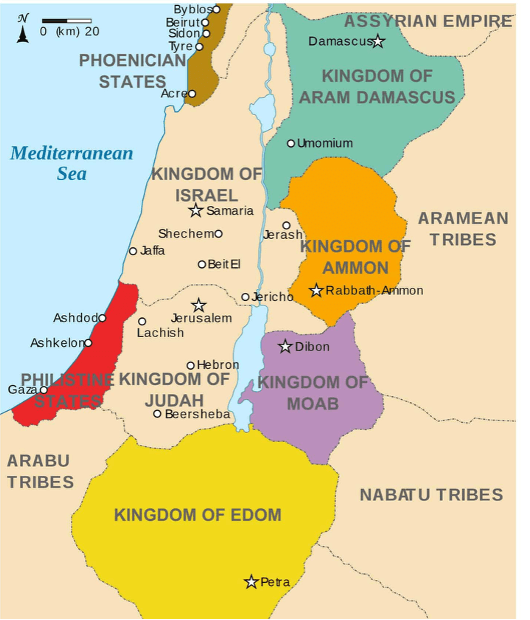
Then Zephaniah includes a list of Israel’s and Judah’s tormenters over the centuries as those who will also be included in God’s coming wrath. Verses 4-7 identify primary cities of Philistia—just west of Judah. This coastal area will be depopulated and eventually serve as pastureland for a remnant of Judah. Verses 8-11 highlight the Kingdoms of Ammon and Moab, east of Judah and Israel and descendants of incestual relationships between Lot and his two daughters (Gen. 19:36–38). God provides a specific reason for their guilt: “This is what they will get in re-turn for their pride, for insulting and mocking the people of the Lord Almighty.” This land will become wasteland, like Sodom and Gomorrah. Verse 12 says the Cushites (Ethiopia-south of map) will die by the sword. Verse 13-15 say Assyria, north of Aram, and their once mighty city Nineveh will only be fit for desert animals.
READING FOR MAY 21, 2026 CONTINUED: MARK 6, PSALM 45:1-9 MARK 6 Often we categorize people and are blind to the facts in front of us. Jesus returned to Nazareth healing and speaking wisdom, but the people could not get past their own familiarity with Him. They knew Him as the son of Mary, perhaps, remembering the timing of His birth, not as the son of Joseph. They knew Him as a carpenter, not as a teacher or healer. They knew his many brothers and sisters. Their familiarity with Jesus blinded them to the reality of Jesus. How many of us have been familiar with Jesus through decades at church? But do we know Him personally as God the Son who alone can save us from death. Do we know Him as Lord whose words we either completely obey or reject because this cultural moment finds them outdated? Does our faith save us or does our unbelief prevent Him from working among us?
As we read before in Matthew 10, Jesus sent out His disciples for ministry. As in Matthew, He told them to travel very light and not be dismayed if they were not well received. We learn here that he sent them out in pairs. This is a model that Paul later followed in his own successful missionary trips and still has merit. Mark’s account also gives a slightly different, but complementary, slant on the message they should convey: “They went out and preached that men should repent” (6:12). How does this align with the outreach ministries of our church?
King Herod heard of this outreach because it succeeded in attracting huge attention. It is no wonder that he associated this message of repentance with John the Baptist, repentance being the focus of John’s ministry. John even specified the sin of which Herod should repent: marrying his brother’s wife. An extra fact we learn in Mark is that Herod enjoyed listening to John. The Rev. Billy Graham met with every president from Harry Truman to Donald Trump (https://billygraham.org/gallery/billy-graham-pastor-to-the-presidents/). They also enjoyed listening to him, but did they repent and receive Jesus as their Lord and Savior? It is not for us to say (Rom. 2:1-4), but there is a day coming when this will be judged (Rom. 2:5-10).
We learn two new facts in Mark’s telling of the feeding of the 5,000:
- Jesus compassionately viewed the 5,000 as sheep without a shepherd: directionless and even lost.
- Jesus then commanded the 5,000 to rest in green grass and organize in smaller groups of 50 and 100.
We also see two differences from Matthew in Mark’s telling of Jesus walking on the water:
- Peter’s aborted walk on the water is not mentioned, likely because Peter recounted the story to Mark.
- Mark says that the disciples didn’t apply any insights from the feeding to their storm experience.
PSALM 45:1-9 This Psalm clearly references Jesus as the second person of the Trinity. How do we know? Heb.1:8-9 quotes verses 6-7: “But regarding the Son He [God the Father] says, 'Your throne, God, is forever and ever, And the scepter of righteousness is the scepter of His kingdom. You have loved righteousness and hated lawlessness; Therefore God, Your God, has anointed You With the oil of joy above Your companions.’” This last statement is comprehensible only via the concept of the Trinity.