
READING FOR APRIL 24, 2026: ISAIAH 61, 1 CORINTHIANS 16, PSALM 35:15-28
ISAIAH 61 We know how the prophecy of the first two verses was fulfilled because of what Jesus said and did in Luke 4:16-20. Here is that scene in the Nazareth synagogue: “He entered the synagogue on the Sabbath, and stood up to read. and the scroll of Isaiah the prophet was handed to Him. And He unrolled the scroll and found the place where it was written: ‘The Spirit of the Lord is upon Me, Be- cause He anointed Me to bring good news to the poor. He has sent Me to proclaim release to captives, and recovery of sight to the blind, to set free those who are oppressed, to proclaim the favorable year of the Lord.’ And He rolled up the scroll, gave it back to the attendant, and sat down; and the eyes of all the people in the synagogue were intently directed at Him. Now He began to say to them, ‘Today this Scripture has been fulfilled in your hearing.’” If Jesus was the lectionary this Sunday at Yorktown Methodist and made these comments after reading the scripture, it would be pretty dramatic.
A few additional comments:
- Jesus said the Holy Spirit was upon Him. This happened immediately after his baptism (Luke 3:21). This happens to us whenever we place our faith in Him: “If anyone does not have the Spirit of Christ, they do not belong to Christ” (Rom. 8:9).
- Jesus calls himself the Anointed One. This is English for the Greek word “Christ” and the Hebrew word “Messiah.”
- The good news Jesus brought to the poor wasn’t that more money was on the way. It was the Gospel. They and we can be rich in faith. This is one time when it’s good to “get rich quick.”
- The release to the captives was not escaping from incarceration but being freed from sin.
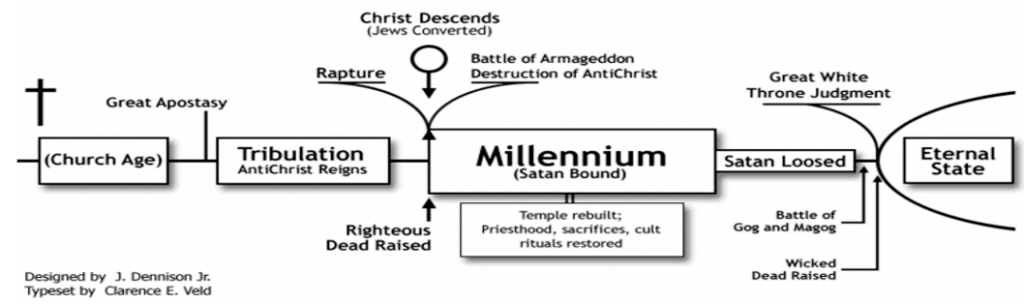
Jesus stops quoting from Isaiah before it says a “day of vengeance.” Thus, the text in Isaiah that follows the words “favorable day of the Lord” may refer to a time that was still yet to come. Isaiah 61:2 refers to this “Day of the Vengeance of our God.” Then the remainder of the chapter is good news for God’s people. This includes comfort for Zion, God glorified, cities rebuilt, strangers serving God’s people while God’s people all become priests. This sequence of God’s vengeance followed by blessings closely resembles God’s punishment of the Beast and his followers (Rev. 19: 20-21) followed by the blessings (Rev. 20:1-6) describing good things to take place during the millennium, which corresponds closely to Isaiah 61:3-11. By way of reminder, here is the basic flow chart of Historic Premillennialism:
READINGS FOR APRIL 24, 2026: PSALM 35:15-28
1 CORINTHIANS 16 The final chapter of 1 Corinthians begins by Paul answering a question about a collection the Corinth church has been undertaking. This is most likely the offering Paul promised he would take up for the Jerusalem church when he met with Peter and James (Galatians 2:1-10). Paul has taken considerable time and energy to make good on this offering. Each week (on Sunday), each person/family should set aside money toward the offering so that when Paul comes it will already have been collected. Paul reaffirms his plans to come and see the people of Corinth as soon as it is possible. His last words of encouragement are: “Be on your guard; stand firm in the faith; be courageous; be strong. Do everything in love” (1 Cor. 16:13-14). A reminder that love is the most important and greatest thing.
PSALM 35:15-28 Today’s reading is the ending of a psalm that is an appeal to God. David is asking God to come to his defense. David has been attacked by people who he has treated as dear friends. We are discussing the psalm based upon its structure.
Verses (11-14) 15-16 - This section of the psalm has been split in our readings. This
section details the reasons why David is seeking God’s assistance. Even though David had
compassion for them in their time of need, his attackers waited for him to have trouble and
then took advantage of the situation. They met behind his back and plotted against him with
slander and malice.
Verses 17-21 – David asks God how long will David have to endure. The question of
“how long” expresses the grief of unanswered relief. It exhibits the boldness that David
interacted with God. It holds in tension both the frustration of not having received what was
asked for and the assurance that God will do what was asked. David is struggling because the attackers are gloating over him. He is asking God to put an end to the ridicule and harassment that he is facing. Have you ever wondered, “how long?” Have you ever struggled to see God in a moment when you think everyone is against you? Keep asking for God’s strength and perseverance in these times of trouble.
Verses 22-25 – David returns to the opening appeal in verses 1-3. David knows that God
will come to his aid. God will make David stronger in the end and restore him.
Verses 26-28 – The psalm returns to the request of verses 4-6. David is asking for those
who accused him falsely to be put to shame. Those who caused David harm would be
disgraced because of their actions. The psalm ends with words of praise. Even though David is experiencing a difficult situation, words of praise are on his lips. David promises to praise God all day long. When life is tough (yes, it will be), we are called to praise. When life is good, we are called to praise. All day long, we are called to praise.