READING FOR AUGUST 21, 2025: 2 CHRONICLES 3, LUKE 13, PSALM 85 2 CHRONICLES 3 This chapter covers the same material regarding the construction of the Temple that we looked at in 1 Kings 6 on August 19, 2025. Let’s focus on some of the added details Ezra gives in his account. The site chosen in Jerusalem was called Mount Moriah. Traditional Jewish thought considers this site as the same location as Abraham’s near sacrifice of Isaac: “A district in Palestine containing several mountains, on one of which Abraham was commanded by God to sacrifice his son Isaac (Gen. xxii. 2). It is very likely that the Chronicler identified the mountain of the Temple with that of the sacrifice of Isaac” (Jewish Encyclopedia). If this is true, the symbolic significance would powerfully illustrate over multiple centuries the connection between sacrifice (Lev.16:13), faith (Heb. 11:17), and atonement for sin (Lev. 16:16).
What we do know for certain from this text alone is that Mount Moriah is the place “where the Lord had appeared to his father David, at the place that David had prepared on the threshing floor of Ornan the Jebusite” (vs. 2). You may recall this story from 2 Samuel 24 when David sinfully called for a census of the people, which resulted in a plague sent by God that killed 70,000 Israelites. It only stopped when David offered a burnt sacrifice on the altar he built on the threshing floorpurchased from this Jebusite. Here again we see God’s wrath satisfied through sacrifice. All these events foreshadowed the ultimate sacrifice that happened when Jesus was crucified on Mt. Calvary upon which our salvation depends, if we place our faith in Him: “God presented Christ as a sacrifice of atonement, through the shedding of his blood—to be received by faith” (Rom. 3: 25).
The last verse of the chapter also provides additional information: “He [Solomon] erected the pillars in front of the temple, one on the right and the other on the left and named the one on the right Jachin and the one on the left Boaz.” Jachin means “he will establish,” and Boaz signifies “in him is strength.” Those are two pretty good pillars to ponder whenever we enter God’s house.
Luke 13 This chapter begins with the words, “On that very occasion.” Thus, Jesus is addressing the same huge crowd as in chapter 12. Much of what He teaches here has some connection to the question of who will be in the Kingdom. Let’s focus on this currently controversial issue.
Hypothetical situation from a very well-known current pastor: “A Hindu, Jew, or Muslim woman has heard a bit of the Christian Gospel, remained unpersuaded yet positive about Jesus, and continues to trust in God and seeks to do God’s will as she has been taught it by her parents and religious instructors. She bows, prays, studies, helps the poor, seeks to walk in humility, lives a life of service and gives sacrificially. In her heart, she loves God, but is not
persuaded, based upon the Christians she has met and heard from, that Christianity is the
READING FOR AUGUST 21, 2025 CONTINUED: LUKE 13, PSALM 85
truth. Is there any hope for this person? I believe that God, who is just and loving, sees this woman’s heart... and that it is possible that she will be saved.”
In verses 1-3 we learn about Galileans (from the same area as Jesus) who practiced sacrifices and even died for their faith. Perhaps they might meet the pastor’s standard above, but they perished according to Jesus. Some Jews died in a tower accident. Jesus said they too perished but weren’t worse than the rest of Jerusalem or His present listeners unless they all repent. The synagogue leader in verse 14, like the non-Christian woman above, sought to do God’s will as taught by his parents and instructors and even quoted the commandments. Jesus called him a hypocrite. In the example above, the famous pastor says the woman seeks to walk in humil- ity, but in verse 24 Jesus says many will seek to enter the kingdom but won’t be able. What’s their problem? They didn’t have a relationship with Jesus:“I do not know where you are from”(vs 25)
In verse 34, Jesus said that He longed to have a relationship with Jerusalem, but they were not persuaded, like the woman above. He said they are desolate unless and until they acknowledge Jesus as coming in the name of the Lord (vs.35). The fictional woman above appears to be a fine woman by human standards, but we can’t be saved by works. The best of us fall short of God’s standard: “For all have sinned and fall short of the glory of God” (Rom 3:23). The author says she knew about but rejected Jesus: “The one who believes in the Son has eternal life; but the one who does not obey the Son will not see life, but the wrath of God remains on him” (John 3:36).
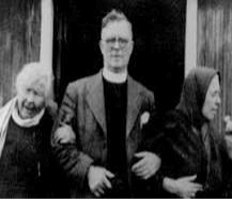
PSALM 85 In verses 1-3 the Psalmist looks back in history when God restored Israel after a period of sin and experiencing God’s wrath. The Psalmist, sensing Israel’s current spiritual struggles, prays for revival again. The Hebrides Islands off Scotland experienced such a revival in 1949-1953. Sisters Peggy and Christine Smith were the instruments of revival prayer God used. Peggy was blind and Christine homebound with arthritis. Where can Yorktown find such giants today?
This prayer is so real to the Psalmist that he envisions what God will say and do for them. In this revival, he sees four virtues of God reigning over His people: Graciousness, Truth, Right- eousness and Peace (vs. 10). There is no record of a previous revival at our church, but let’s pray verse 6 anyway: “Will You not revive us again, so that Your people may rejoice in You?”