READING FOR AUGUST 26, 2025: 1 KINGS 8, LUKE 16, PSALM 87 1 KINGS 8 We need to be selective in reviewing this chapter due to the immense amount of material. This event is the official opening and dedication of the Temple. All the leadership of Israel gathered (vs. 8) and experienced the offering of an unlimited number of animal sacrifices (vs. 5). When the ark possessing the tablets of Moses was brought into the most holy place, God’s glory, His special presence, filled the Temple like a cloud so that, upon exiting from the most holy place, the priests were unable to stand and minister. This event should remind us that one of the attributes of God that required Him to send His Son to die for us is His overwhelming holiness. He is not a vending machine or a get-out-of-jail-free card.
After Solomon acknowledged this display of God’s glory, he turned to address the people. He reminded them about how they got to this point, particularly God’s interaction with his father, King David. He pointed out that this day represented the fulfillment of God’s promise: “Now the Lord has fulfilled His word which He spoke” (vs 20). Then he stood before the altar of God (see yesterday’s diagram), raised his hands toward heaven, and prayed to the Lord God of Israel who is like no other on earth or heaven. Some national leaders like flashy visuals, but no one can beat the high drama of this scene.
The content of Solomon’s prayer provides great insight for Israel and for us. He says God’s covenant to them (and this writer believes the new covenant to us) is unbreakable as long as they/we “walk before You [God] with all their [our] heart” (vs. 23). Then he asks God to keep His promise to David to not deprive him “of a man to sit on the throne of Israel, if only your [David’s] sons are careful about their way” (vs. 25). All of our earthly knowledge would never have led us to consider how God ultimately fulfilled this promise: “You [Mary] shall name Him Jesus. He will be great and will be called the Son of the Most High; and the Lord God will give Him the throne of His father David; and He will reign over the house of Jacob forever” (Luke 1:31-33).
Solomon then prays for the people for when they need God’s discernment or forgiveness for when their sin results in military defeat, draught, famine, or the plague: “Then hear in heaven, Your dwelling place, and forgive and act, and give to each in accordance with all his ways, whose heart You know—for You alone know the hearts of all mankind” (vs.39). Picking up on this idea about all man- kind, he asks for God to also hear the prayer of the foreigner who comes to faith, drawn to Jerusalem because of the Temple’s great fame. May others come to faith in Jesus because there is something about Yorktown Methodist that draws them in. Solomon turns to the people for the benediction reminding them that he asked for God’s blessings on them “SO THAT ALL THE PEOPLES OF THE EARTH MAY KNOW THAT THE LORD IS GOD; THERE IS NO ONE ELSE” (vs. 60). Do we have this same main desire?
READING FOR AUGUST 26, 2025 CONTINUED: LUKE 16, PSALM 87 LUKE 16 Again, let’s go right to the punchline of this parable to see what Jesus is teaching us. He said that we should use our resources now to maximize our impact for the Kingdom of Heaven. This could include investing our time and treasure in evangelism or helping the poor. We see in verse 14 he shared this parable because“The Pharisees, who were lovers of money, were listening to all these things.” This is a rather playful parable because the manager admitted to being rather like most of us: too weak to dig and too ashamed to beg. Even though the master was being cheated on what was coming to him, he had to admire the craftiness of the manager. Jesus is certainly not endorsing cheating our boss, but he does want us to invest in kingdom priorities. Jesus evaluates how we handle our earthly resources to see if we are reliable to manage heavenly riches. If our ultimate goals are wealth, comfort, and appreciation on earth, we are making an eternal mistake.
Jesus makes an important point about a constantly misunderstood issue. The Old Testament is 100% true and was the focus of God’s plan until John the Baptist came. John’s role was to prepare the way for Jesus’s work and the Gospel, which fulfills the law and prophets. The time at which Jesus was preaching was a time of transition between these stages. As part of this new stage is the return to the creational concept of marriage for life. The permanency of Christ as groom to the church as bride is now mirrored in human marriage. Finally, let’s go to the punchline of the story about the rich man and Lazarus. Jesus says if we don’t accept the Old Testament as God’s word to us, we won’t accept His work and words today. There is a straight line from the Old Testament to the Gospel of Jesus Christ. Believe it all and be saved.
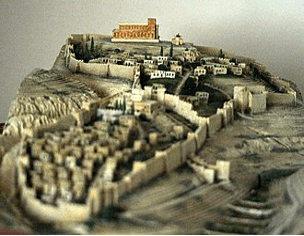
PSALM 87 This Psalm is an ode to Jerusalem, both the literal city and likely the heavenly city of God. As mentioned in verse one and shown in this illustration of Solomon’s time, the city was built on a hill or mount. Its elevation is about half that of Denver’s. God chose Jerusalem to be the place on earth where much of His revelation to man occurred. Although it rejected Jesus during His life on earth, He loved it greatly (Matt. 23:7). The Psalmist mentions that people from many great cities know God, but Jerusalem alone has been home to most of the prophets, kings, and the Temple of God.
Both this Psalm and Hebrews refer to a future registration or enrollment of its citizens: ”You have come to Mount Zion and to the city of the living God, the heavenly Jerusalem, and to myriads of angels, to the general assembly and church of the firstborn who are enrolled in heaven” (Heb. 12:22-23). John Kennedy once famously said, “Ich bin ein Berliner.” We are citizens of and marching to Zion.