
READING FOR MAY 18, 2026: 2 CHRONICLES 34, MARK 3, PSALM 44:1-8
2 CHRONICLES 34 This chapter provides a review of King Josiah’s inspiring reign, which we first read about in 2 Kings 22-23. An interesting feature in Ezra’s retelling here is the timeline he provides of some of Josiah’s accomplishments. Since Ezra was also a rebuilder and spiritual restorer in his time, this kind of timeline would have interested him. Perhaps we can look back at our lives and likewise construct a timeline when God worked with and through us to achieve his purposes in our lives. Below is how and when God worked with Josiah and how God worked in a much more modest way through this writer’s much less highly visible life:
| King Josiah’s timeline | Reading guide writer’s timeline |
| Became king of Judah at age 8 | Entered 3rd grade at age 8 |
| Followed God Intentionally at age 16 | Consciously expressed faith in Jesus at age 9 |
| Purged idols from Judah and Jerusalem at age 20 | Moved from home but continued faith at age 22 |
| Read God’s Word and led national revival at age 26 | Began teaching at a Christian college at age at age 27 |
| Concluded his reign at his death at age 39 | Retired as administrator at community college at age 62 |
Looking at the bullet points of life makes one aware of how quickly time passes. It also shows how God works dramatically differently in each person’s life. It’s easy to be jealous of the impact King Josiah had in his short life, but it would remiss not to be 100% thankful to God for His faithfulness, especially for the rich blessings of family and friends not included in this sort of chronology.
MARK 3 In our discussion of Mark 2 we considered Sabbath practices for us today. Here again, we see the Pharisees continuing to be offended by how Jesus practiced the Sabbath. Notice, before Jesus healed the man, he asked the Pharisees if they thought it was lawful to do so on the Sabbath. They didn’t want to go on record but immediately began conspiring against Jesus when he healed the man. How like many of us who don’t take a stand when it matters but are quick to criticize when someone violates our way of doing things. As it says in the text, Jesus is grieved when we use unbiblical traditions as excuses not to show love to those in need.
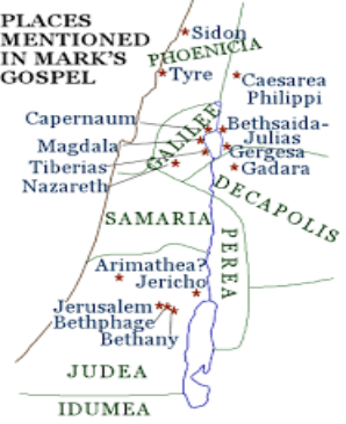
Just as did John the Baptist, Jesus’s unique ministry (in Galilee in this chapter) attracted large crowds from an enormous geographic area, from Sidon on the north seacoast to Idumea to the south of the Dead Sea. He did not use social media or any great promotional campaign. In fact, He often told people not to spread the news of his miracles. Yet, as people sensed the power of His teaching and deeds, the word spread. Can we attract people to get out of bed on Sundays to worship this loving and mighty Lord today? Jesus has not changed: “Jesus Christ is the same yesterday and today, and forever” (Heb. 13:8). Let’s worship Him as if this is true.
READING FOR MAY 18, 2026 CONTINUED: MARK 3, PSALM 44:1-8 It’s interesting, isn’t it, that demons clearly identified Jesus as the Son of God, and He did not disavow this statement of His divinity. Yet, extremely well-known Biblical scholars, such as Bart Ehrman, wrongly state on national media that Jesus did not claim to be God in the book of Mark. And they are acclaimed as “enlightened scholars.” Beware of false teachers!
Jesus chose twelve disciples, Judas Iscariot included, to receive authority to preach and cast out demons. Was Judas a believer at that point? It seems the very definition of any betrayer, say Bennedict Arnold, that someone fully on one side then joins the opposing side. Thus, if Judas fits this definition, he is an example of someone who was a believer who voluntarily gave up His salvation—just as Satan gave up his place in heaven as an angel of light. Traditional Presbyterians would not explain this as losing salvation—a point of doctrinal difference with Wesleyans.
Blaspheming the Holy Spirit is called an unforgivable sin (Mark 3:29). Since John 15:26 says the Spirit testifies about Jesus, rejecting Jesus may be the sin that can’t be forgiven. Even Jesus’s mother and brothers still didn’t accept Him at this point. Jesus didn’t give them any special pass. Only believers are part of His spiritual family. This view of Mary differs with Catholic doctrine, which holds that Mary was sinless.
PSALM 44:1-8 These first verses suggest that the story of God and His people was communicated by oral tradition, specifically fathers, over an unbroken chain of multiple generations. This was enough for generations to make God their king and trust Him totally. Paul also affirms this is the duty of fathers (Ephesians 6:4). Have we noticed our younger generations continuing to walk with God or has there been a drop off? If we fathers still have children, grandchildren, or great grandchildren, it’s not too late. We don’t have to be extroverted, knowledgeable, or confident. We just need to be obedient.
