READINGS FOR OCTOBER 17, 2024: NUMBERS 25, HEBREWS 1, PSALM 107:33-43
Numbers 25
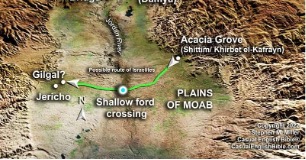
The region of Shittim is in the land of Moab (the Moabites). It is across the Jordan River from the city of Jericho. It will be the place from which the Israelites will begin their conquest of Canaan (the Promised Land)(see Joshua 2:1).
While the people of Israel are here, they begin to be corrupted by the religious practices of the Moabites. The Moabites worshipped the pagan god, Baal. The Israelites began to engage in several rituals and were drawn into worship of a false god. It was not just the sexual immortal acts that angered God. It was the totality of the abandonment of the worship of God in pursuing other gods. It was a breach of the covenant that God had made with his people (see Exodus 20:3-4).
God is angered. God brings a plague upon the people and instructs Moses to kill all those who have worshipped Baal. Aaron’s grandson, Phinehas, stops a Jewish man and a Midianite woman from defiling the Israelite encampment, by taking a spear and stabbing them both through the stomach (and pinning them to the floor of the tent). This act stops the plague and 24,000 Israelites died.
This act by God may seem that drastic. God warned the people of Israel when they received the covenant. In Exodus, we find:
You shall not bow down to them or worship them; for I, the Lord your God, am a jealous God, punishing the children for the sin of the parents to the third and fourth generation of those who hate me (Exodus 20:5, NIV)
We are either all in in worshipping God or we are out. We are not to follow the false gods of our culture (insert some idol here). We are to follow Christ alone.
Hebrews 1
A brief introduction to the book of Hebrews. The author is unknown. Tradition suggests three possible authors.
Paul – From 400 – 1600 AD, Paul was the attributed author. However, this is doubtful. The writing style in the original Greek and the emphases in the letter do not match Paul’s style in the other letters we know are from him.
Barnabus – In 200 AD, Tertullian gives credit to Barnabus. Barnabus fits the requirements. He was an educated Jewish Christian that travelled with Paul.
READINGS FOR OCTOBER 17, 2024 CONTINUED: NUMBERS 25, HEBREWS 1, PSALM 107:33-43
Apollos – Martin Luther first suggests Apollos and many scholars believe he may be the writer. Apollos was an educated Jewish Christian that was well known in the early church.
The dating of Hebrews is difficult. It is probably somewhere between 54 and 70 AD (and most likely before 64 AD. It was written to Jewish believers in Rome. Its main focus is the absolute supremacy and sufficiency of Jesus Christ as the one who revealed and mediates God’s grace.
The letter to the Hebrews begins by the author stating that Jesus is superior to the prophets and the angels. The author lists seven qualifications of Jesus in verses 1-3:
- God appointed Jesus as heir of all things
- God made the universe through Jesus (The Divine Word)
- Jesus is the radiance of God’s glory
- Jesus is the exact representation of God’s being
- Jesus sustains all things by his powerful word
- Jesus provided purification for sins
- Jesus sat down at the right hand of God in heaven.
Next, the author quotes several Old Testament scriptures to emphasize his point that Jeus is superior to the angels. (Psalm 2:7 (verse 5), 2 Samuel 7:14; 1 Chronicles 17:13 (verse 5), Deuteronomy 32:43 (verse 6), Psalm 104:4 (verse 7), Psalm 45:6-7 (Verse 9), Psalm 102:25-27 (verse 12), Psalm 110:1 (verse 13). The key here is that Jesus, the Son of God reigns over the earth and the angels minister as those sent to serve.
Psalm 107:33-43
Verses 42-43 sum up the emphasis of this psalm.
The upright see and rejoice,
but all the wicked shut their mouths.
Let the one who is wise heed these things
and ponder the loving deeds of the Lord. (NIV)
Those who have faith in God can see God’s hand at work in many ways. We see God’s unfailing love given to all who are open to receiving it. Those who do not believe in God do not see it.
The psalm ends with a call to the wise. We are to take time to ponder the love of God. When call reaches into your life and shares love with you, take a moment to praise God. Ponder what it means that God loves you so much that, “Indeed, the very hairs of your head are all numbered. Don’t be afraid; you are worth more than many sparrows. (Luke 12:7, NIV)”